Can scientific concepts be taught as everyday concepts? My middle school physics teacher
I began reading the chapter on the development of scientific concepts and it was interesting to see how Vygotsky differentiates between scientific and everyday concepts. Scientific concepts are simply learned or received in completed form (most commonly introduced as a term along with its definition) which in turn leads to understanding, learning, and comprehension. Whereas, everyday concepts do not have a formal definition, need not be universal but still helps us understand the functioning of the society and the world in which we live. When reflecting on all this, I was reminded of a middle school physics teacher I had (Sadly, we had her only for one year), who would not introduce new concepts as 'words' and definitions but instead, would begin class with a demonstration. One of which is depicted below. I so vividly remember her explaining inertia through this method:
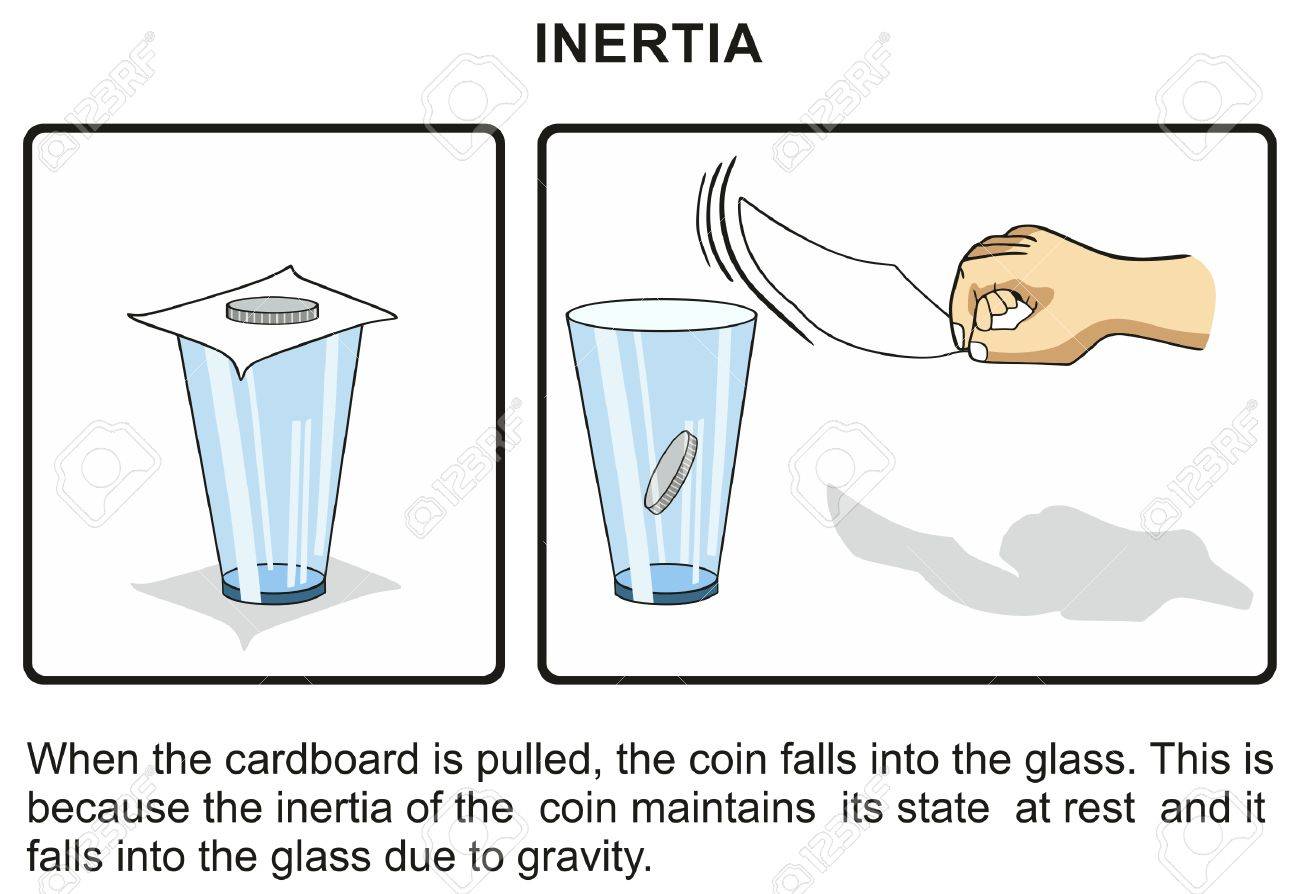
She also gave us many examples of standing in a bus and how we would move either front or back depending on whether the bus was stopping or starting (inertia of motion and rest). In another class, she actually got a prism and showed us how white light was comprised of so many colors. I am sure many of our teachers showed us all this in physics labs.

So my question is, if such hands on experiments and examples are given to explain various concepts including motion and force, fluids and buoyancy, temperature relativity, homeostasis, light and refraction, gravity etc, then would the difference between scientific and everyday concepts be limited only to its level of generalizability and abstraction? I mean for example, I feel like many physical scientific aspects are occurring in our everyday life, and we experience it frequently in many ways, so how does that then make it different from an everyday concept? My husband is an engineer and he has spent so much time reading/working with scientific concepts, that he is able to see it clearly in his everyday life. Does it then also come down to level of exposure/time spent/familiarity with the content?
She also gave us many examples of standing in a bus and how we would move either front or back depending on whether the bus was stopping or starting (inertia of motion and rest). In another class, she actually got a prism and showed us how white light was comprised of so many colors. I am sure many of our teachers showed us all this in physics labs.
So my question is, if such hands on experiments and examples are given to explain various concepts including motion and force, fluids and buoyancy, temperature relativity, homeostasis, light and refraction, gravity etc, then would the difference between scientific and everyday concepts be limited only to its level of generalizability and abstraction? I mean for example, I feel like many physical scientific aspects are occurring in our everyday life, and we experience it frequently in many ways, so how does that then make it different from an everyday concept? My husband is an engineer and he has spent so much time reading/working with scientific concepts, that he is able to see it clearly in his everyday life. Does it then also come down to level of exposure/time spent/familiarity with the content?
I agree with your point that we encounter many different examples that we can actually observe with scientific principles such as buoyancy, light, gravity, etc. I think these can still be observed by us even when we do not have related knowledge, but they can only be understood in line with the related scientific principles when we actually learned them, right? However, we cannot catch and find every phenomena in our daily lives that are related to each and every scientific knowledge. My point here would be, maybe when there seems to be differentiation between scientific concepts and everyday concepts, it maybe that there are scientific concepts that we can only experience and learn through and within the scientific knowledge and filed, not through our daily lives' observable phenomena, though.
ReplyDelete